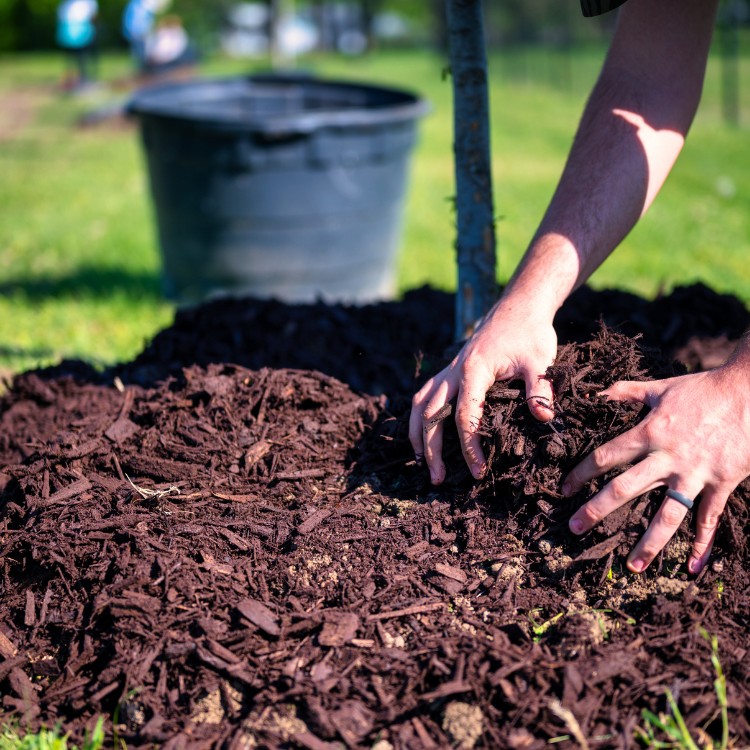
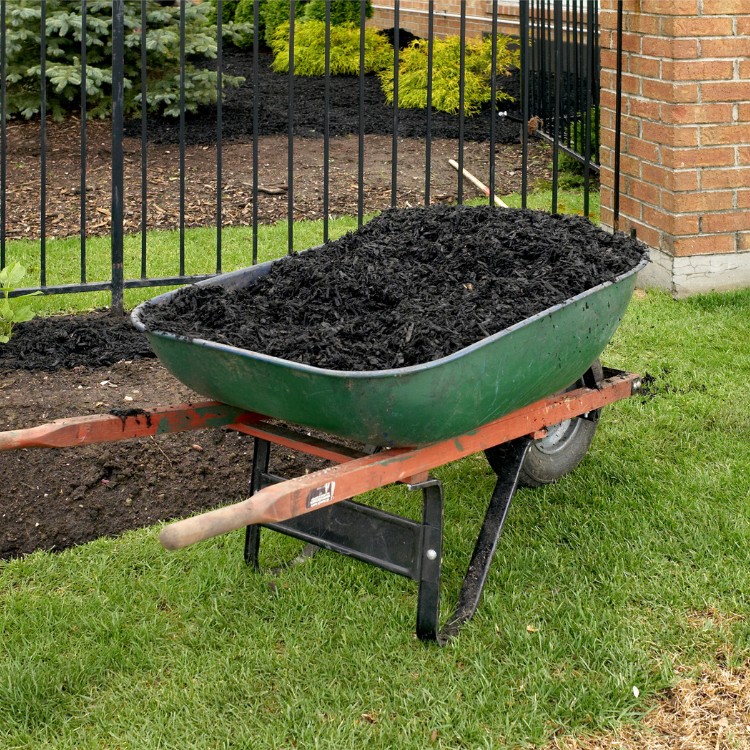
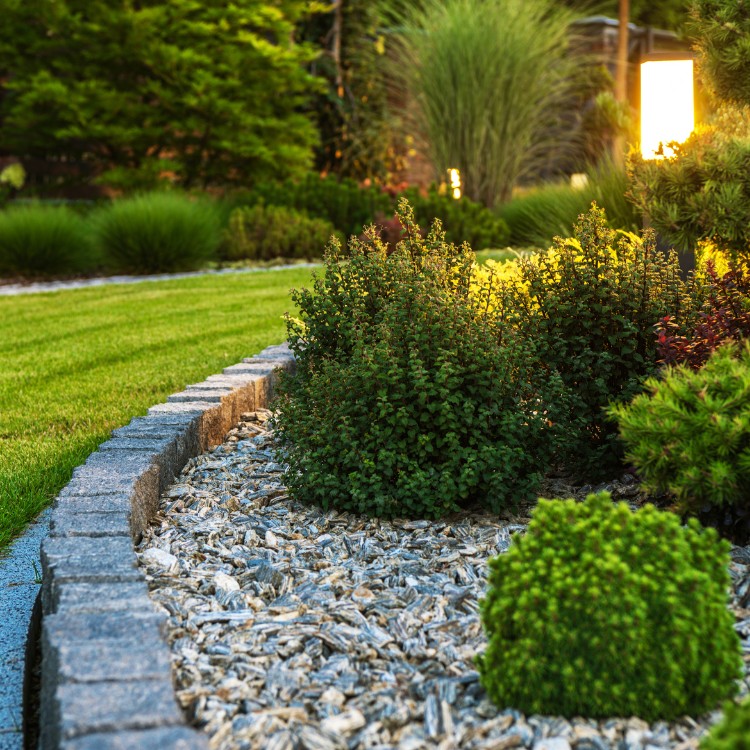
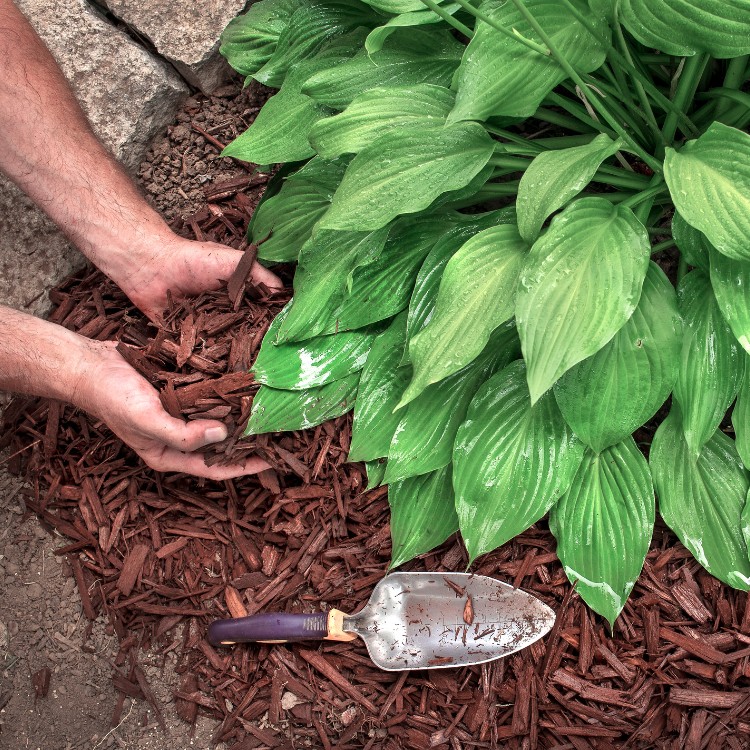
Mulch selection affects appearance, durability, and how often it needs refreshing. Common options include shredded bark for good staying power on slopes, wood chips for natural texture, and finer mulches for a smoother, more uniform look. Color options can complement your home and landscape style, but the best choice also depends on sun exposure, rainfall patterns, and how quickly you want material to break down.
Depth matters as much as the mulch itself. In most landscape beds, a consistent 2–4 inch layer is ideal for moisture retention and weed suppression without starving roots of oxygen. Too little mulch dries out quickly and allows weeds through; too much can trap moisture against stems, encourage fungal issues, and create shallow rooting.
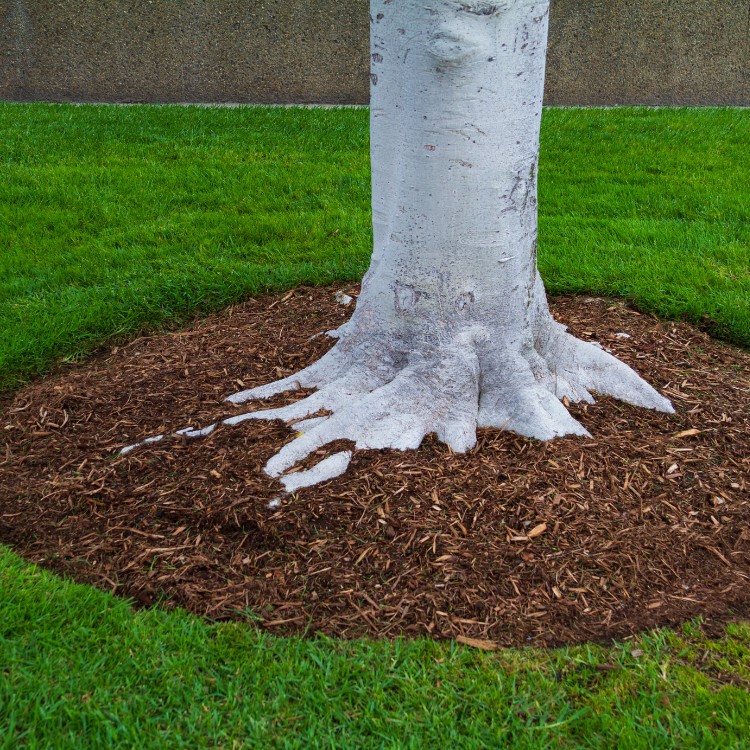
We also pay attention to “volcano mulching,” where mulch is piled against tree trunks. This is a common cause of bark decay and pest problems. Proper mulching keeps a small gap around trunks and plant crowns, allowing airflow while still protecting the root zone.